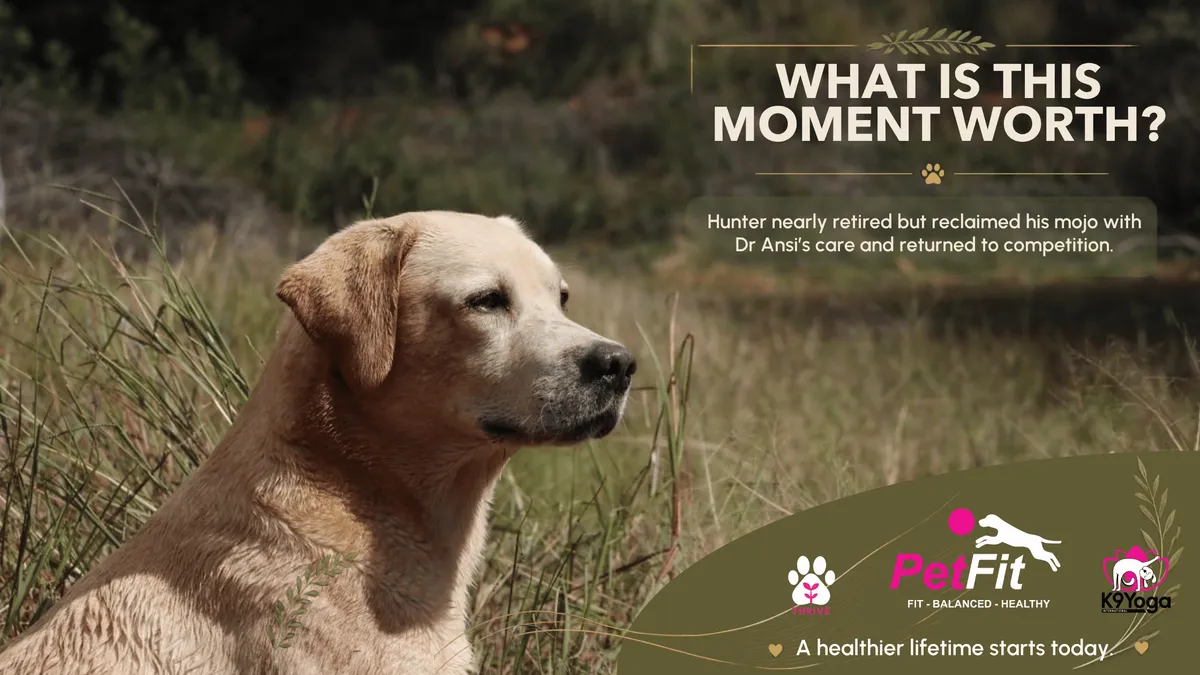
Hunter's story of finding his mojo again
What Is This Moment Worth?
For some dogs, the moments that matter are quiet ones.
A walk around the block.
A game in the garden.
A comfortable stretch in the sunshine.
A sniff around a favourite patch of grass.
For other dogs, those moments are a little more intense.
A whistle.
A command.
A long retrieve.
A steep hillside.
Cold water.
The anticipation of the next run.
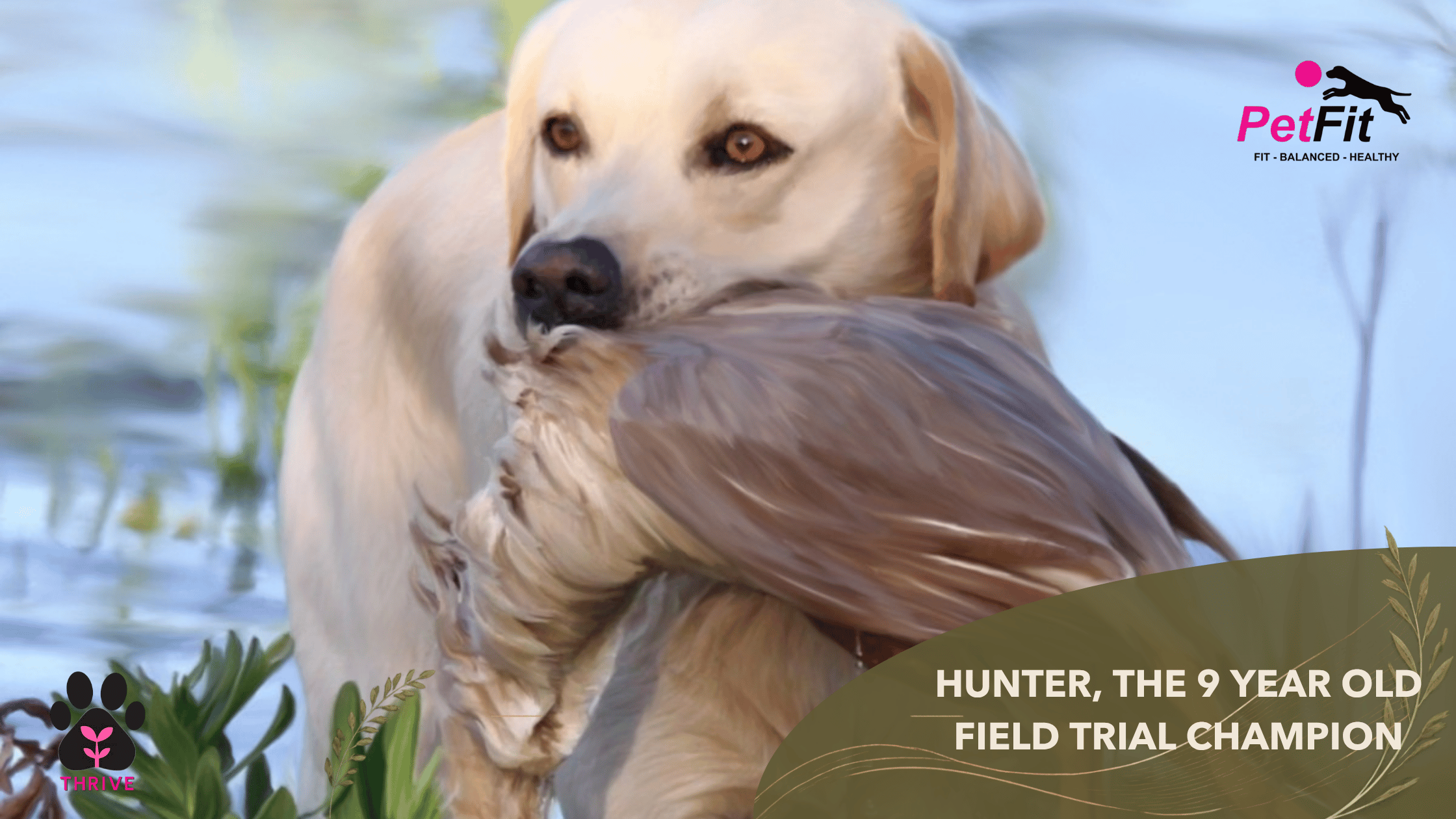
For Hunter, a 9-year-old working Labrador, those moments are about doing the job he was bred and trained to do.
And in 2026, he reminded us just how much those moments can be worth.
Meet Hunter
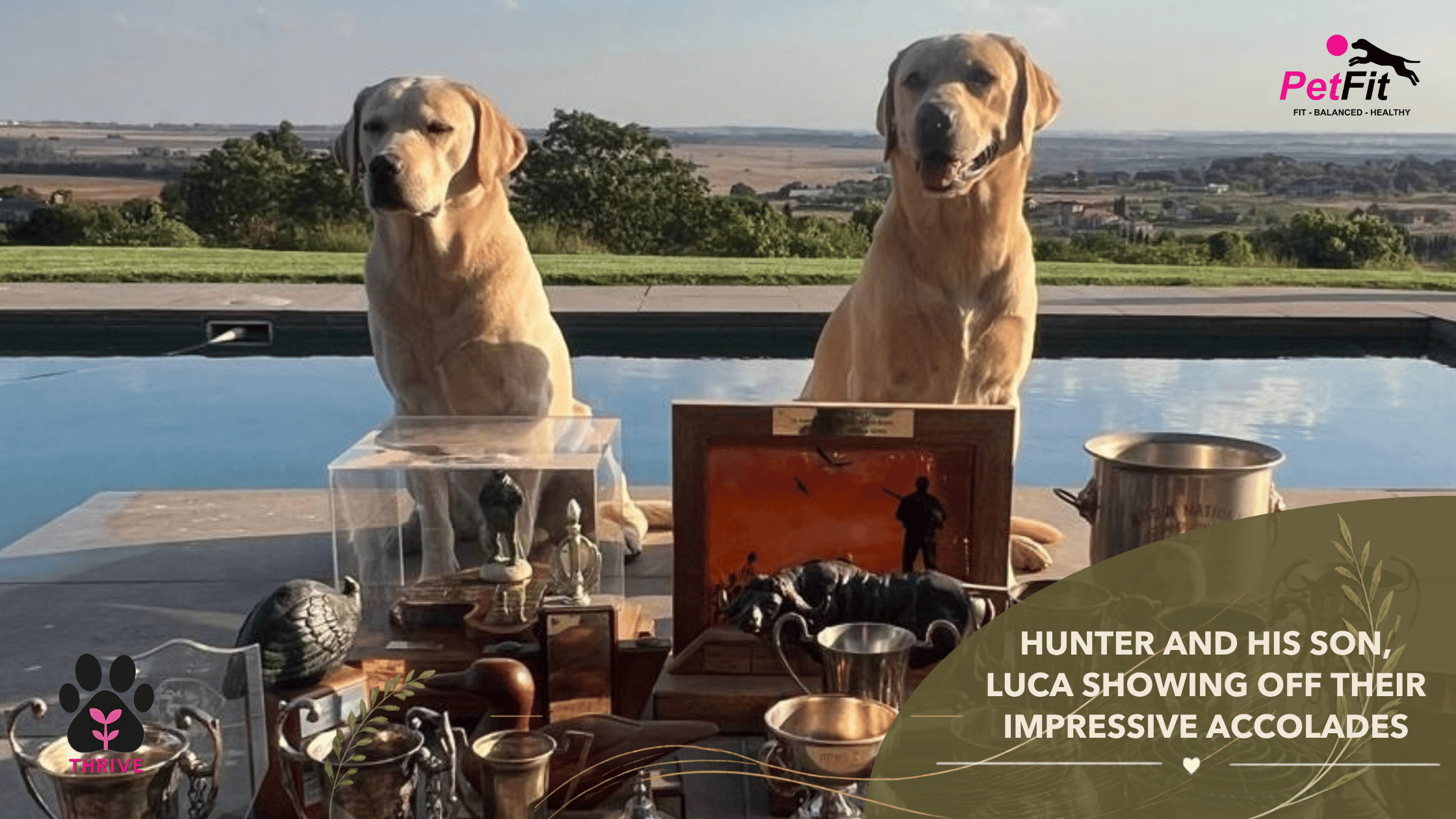
Hunter was born on 18 August 2017, from Dave Padbury's Major — Walkabout Intrepid of Tashinga FTA GMHR — and Rho Hansen's Indy — CH Longformacus Leading Lady of Tushielaw NHR FQ.
From his very first Junior Field Trial in 2018, Hunter showed the potential that had been hoped for when the litter was conceived.
As his owner Fred says, Hunter has been everything they dreamed he would be.
Much of the credit for Hunter's development goes to Fred and the work he has put into training him over the years.
Hunter became a highly accomplished working Labrador, competing in the demanding world of Field Trials.
But even the most talented and experienced working dogs don't stay exactly the same forever.
And eventually, Hunter's body began to tell a different story.
When doing what you love becomes harder
Last year, Fred noticed that Hunter had slowed down considerably.
More importantly, Hunter didn't seem to be enjoying trialling in the same way anymore.
For a dog whose life had been so closely connected to working, training and competing, this was significant.
Fred was even considering retiring him.
It would have been understandable.
Hunter had already achieved a great deal. He was getting older. Perhaps this was simply the point at which his competitive career needed to come to an end.
But before making that decision, Fred took Hunter to Dr Ansi van der Walt at PetFit to have him assessed.
And that decision changed the direction of Hunter's season.
Finding his mojo again
Following his work with Dr Ansi, Hunter started working on exercises designed specifically for him.
These weren't about teaching him to retrieve.
Hunter already knew how to do that.
They weren't about replacing his field training.
They were about supporting the physical side of the dog who needed to perform that work.
Hunter's exercises became part of his preparation and conditioning.
And according to Fred, something important happened.
Hunter got his mojo back.
He started enjoying trialling again.
He went on to win two Opens and place third in another.
Suddenly, retirement didn't look quite so inevitable.
There was still more Hunter wanted to do.
And more moments still to come.
The 2026 National Championship
At nine years old, Hunter went on to compete in his second National Championship Field Trial.
And what happened next was something special.
Hunter finished:
🥉 3rd Overall
🏆 Best Labrador — 2026
For Fred, it was an incredible result.
But when we look at Hunter's story through the lens of “What Is This Moment Worth?”, the trophies aren't really the most important part.
They're evidence of what Hunter was able to achieve.
The real story happened before he ever stood on the podium.
It happened when he slowed down.
It happened when Fred wondered whether his competitive career was coming to an end.
It happened when they decided to find out whether there was something they could do to support him.
And it happened during all those small training sessions when Hunter worked through the exercises prescribed by Dr Ansi.
Those moments don't make headlines.
But they can make a difference to the moments that do.
A working dog's fitness is about more than competition
Field Trials are physically demanding.
Hunter and other working Labradors may need to cover significant distances, navigate uneven and sometimes mountainous terrain, negotiate steep inclines and declines, retrieve over land and water, and remain mentally focused throughout.
Fred's approach to keeping his dogs ready reflects that.
They train on farms on weekends and give the dogs opportunities to run.
Swimming is also an important part of their routine, particularly when they have access to a large dam.
Walking matters too.
And alongside their normal training, Fred incorporates the exercises recommended by Dr Ansi.
The goal isn't simply to produce a dog that can perform brilliantly for one weekend.
It's about supporting the dog throughout the work that happens between competitions.
Because the championship is only one moment.
The preparation behind it is made up of hundreds of smaller moments.
The moments between the moments
This is something we can easily miss when we watch a successful working or sporting dog.
We see the retrieve.
We see the run.
We see the ribbon.
We see the trophy.
We don't always see the work that made that moment possible.
We don't see the walks.
The conditioning.
The repetitions.
The careful progression.
The little exercises performed at home.
The decisions made when a dog isn't moving quite as freely as before.
And we don't necessarily see the owner asking:
“What can I do now to help my dog keep doing this for as long as possible?”
That question is at the heart of Hunter's story.
It's not always about doing more
One of the important lessons from Hunter's story is that supporting a dog's physical health doesn't necessarily mean asking them to do more.
Sometimes it means doing things better.
Understanding how your dog moves.
Recognising changes early.
Building strength and body awareness.
Supporting mobility.
Improving physical capacity.
Adapting training as your dog changes.
And knowing when something that used to be easy isn't quite as easy anymore.
For a young dog, that might mean building a strong physical foundation.
For a sporting dog, it might mean supporting the demands of their chosen activity.
For an older dog, it might mean adapting what they do so that they can continue participating safely and comfortably.
The dog changes.
So our approach needs to change with them.
What is Hunter's moment worth?
For Hunter, perhaps it's the moment he hears the command and knows it's time to work.
Perhaps it's the anticipation before a retrieve.
Perhaps it's charging through the grass.
Perhaps it's swimming out into the water.
Perhaps it's climbing a hillside.
Perhaps it's simply the look on his face when he knows he's going to do something he loves.
At nine years old, those moments aren't necessarily guaranteed forever.
And that's what makes them so valuable.
You never really know when the last moment of something will be.
The last competition.
The last long run.
The last big retrieve.
The last time your dog flies down a hillside without hesitation.
We don't know which moment will eventually become a memory.
But we can choose to pay attention to the moments we have today.
The goal isn't to keep Hunter young
Hunter's story isn't about pretending that he's still a puppy.
He's nine.
He's had years of training and competition behind him.
His body and his needs will continue to change.
The goal isn't to keep him exactly as he was.
It's to help him make the most of the dog he is now.
That's an important distinction.
Healthy ageing isn't about stopping time.
It's about giving our dogs the physical support they need to continue participating in the lives they love, adapting as they change.
And sometimes that means helping a nine-year-old Labrador stand on a National Championship podium.
Sometimes it simply means helping another dog enjoy a comfortable walk.
Both moments matter.
What can we learn from Hunter?
Fred has some advice for anyone starting out in Field Trials.
Start with the right puppy.
Breeding matters, particularly when you're looking for a dog to work in the field.
Build good foundations.
Puppy school and obedience can help establish the discipline that will be needed later.
Find a training group.
Take things slowly.
And most importantly:
Make training fun for you and your dog.
That last piece may be the most important of all.
Because behind every title, every competition and every achievement is a dog who should still enjoy being a dog.
Protecting the moments that matter
Hunter's story doesn't tell us that every dog can compete successfully at nine years old.
It doesn't promise that physical conditioning will prevent every injury or keep every dog competing indefinitely.
What it does show is something much simpler.
Small investments in our dogs' physical health can be part of helping them continue to do the things they love.
For Hunter, those investments have become part of his journey back to the field.
For another dog, they might support agility.
For another, hiking.
For another, playing with the family.
And for a senior dog, perhaps simply getting up comfortably and joining you for a walk.
The activity may be different.
The principle is the same.
So, what is this moment worth?
Hunter's third-place finish at the 2026 National Championship and his title of Best Labrador are remarkable achievements.
But for Fred, perhaps the most meaningful part of the story isn't the trophy.
It's knowing that Hunter got his mojo back.
That he still wants to work.
That he still gets to experience those moments that make him who he is.
And that, for now, there are still more moments to come.
Because sometimes the moment worth protecting isn't the moment when your dog wins.
It's the moment when they get to do what they love.
And sometimes the best time to invest in those moments is before your dog seems to need it.
What is your moment worth?
🐾 A healthier lifetime starts today.
PetFit • K9Yoga • THRIVE